

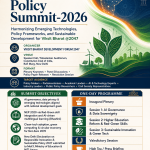



As India marches toward the centenary of its independence in 2047, the national aspiration is clear: to transform into Viksit Bharat (a fully developed nation). Achieving this milestone requires more than robust economic growth metrics; it demands a fundamental commitment to social equity, ensuring that no citizen is left behind. At the core of this […]
As India marches toward the centenary of its independence in 2047, the national aspiration is clear: to transform into Viksit Bharat (a fully developed nation).
Achieving this milestone requires more than robust economic growth metrics; it demands a fundamental commitment to social equity, ensuring that no citizen is left behind. At the core of this developmental journey are two inseparable pillars: Poverty Eradication and Zero Hunger (Sustainable Development Goals 1 and 2).
For India to emerge as a global economic powerhouse, its growth must be inclusive, resilient, and deeply rooted in the empowerment of its vulnerable populations—anchored significantly around the four core socio-economic pillars of Garib (Poor), Mahilayen (Women), Annadata (Farmers), and Yuva (Youth).
Historically, poverty alleviation programs focused primarily on short-term relief and subsistence safety nets.
However, the roadmap to Viksit Bharat 2047 represents a paradigm shift toward multi-dimensional empowerment and sustainable income transition.
- Multidimensional Poverty Reduction: Recent data indicates a massive contraction in extreme poverty, driven by targeted interventions in basic infrastructure—such as rural housing (PM Awas Yojana), household sanitation (Swachh Bharat Mission), and universal access to clean cooking fuel (Ujjwala Yojana).
- Financial Inclusion as a Foundation: Initiatives like the Pradhan Mantri Jan Dhan Yojana (PMJDY) have bridged the historic digital and financial divide, bringing hundreds of millions into the formal banking architecture. Direct Benefit Transfers (DBT) have plugged leakages, ensuring that state welfare reaches intended beneficiaries directly.
- Moving Beyond Subsistence: The long-term strategy for 2047 focuses on insulating low-income and vulnerable households from economic shocks, enabling transitions from mere survival to stable, upward economic mobility.
To achieve near-zero poverty, India’s multi-pronged policy matrix focuses on structural transformation across urban and rural landscapes:
- Livelihood Generation and Skill Development: Through mass upskilling programs (Skill India, National Education Policy reforms), the nation is equipping its vast youth demographic with future-ready capabilities, transforming them into net economic contributors.
- Formal Employment Expansion: Drives like Rozgar Mela and expanding social security frameworks (such as growing EPFO registrations) are formalizing the workforce, offering job security, health insurance, and organized benefits to millions.
- Asset Ownership and Rural Empowerment: Schemes like SVAMITVA—which provides drone-mapped property ownership records to rural households—enable villagers to leverage their land as financial collateral, unlocking grassroots entrepreneurship.
Food Security and Nutritional Resilience
True economic development cannot coexist with chronic undernutrition. SDG 2 (Zero Hunger) is vital for building a healthy, productive human capital base necessary for a $30-trillion economy. India’s strategy balances food distribution with sustainable agricultural practices:
- Universal Food Security Networks: Through the Pradhan Mantri Garib Kalyan Anna Yojana (PMGKAY), food security is guaranteed for over 80 crore citizens, protecting them from macroeconomic shocks and global inflationary trends.
- Targeted Nutritional Fortification: Moving beyond mere caloric availability, the government has integrated nutritional security via interventions like supplying iron-fortified rice through the Public Distribution System (PDS) and mid-day meal programs to combat hidden hunger and anemia.
- The Millets (Shri Anna) Revolution: India’s global leadership in promoting millets has revived interest in climate-resilient, highly nutritious ancient grains. Millets require less water, endure harsh climates, and offer superior nutritional profiles, serving as a cornerstone for future dietary health.
Empowering the Annadata (Farmers) for Sustainable Agriculture
Because a large segment of India’s population depends on agriculture, transforming the agrarian economy is synonymous with eliminating rural poverty and hunger:
- De-risking Agriculture: Programs like PM-KISAN (direct income support), Pradhan Mantri Fasal Bima Yojana (crop insurance), and Soil Health Cards safeguard farmers against unpredictable climate patterns and market fluctuations.
- Modernizing Infrastructure: Investments via the Agriculture Infrastructure Fund and the PM Krishi Sinchayee Yojana (irrigation access) are building cold chains, storage facilities, and efficient water management systems to reduce post-harvest losses.
- Eco-Friendly Transitions: Initiatives like PM-PRANAM promote organic farming and balanced fertilizer usage, ensuring that agricultural productivity does not compromise ecological longevity.
The Citizen’s Role in Building Viksit Bharat
Government policies and infrastructural investments lay the groundwork, but the realization of Viksit Bharat 2047 ultimately rests on the active participation of every citizen:
- Fostering Innovation and Entrepreneurship: Citizens, particularly the youth, are encouraged to move from being job-seekers to job-creators through platforms like Startup India.
- Resource Conservation: Cultivating a civic culture of minimizing food waste, conserving water, and adopting sustainable consumption patterns directly supports national resource security.
- Community Engagement & Mentorship: Grassroots participation in educational mentorship (Vidyanjali) and local governance strengthens social fabric and ensures transparency and efficiency in welfare execution.
The vision of Viksit Bharat 2047 is both an ambitious national pledge and a pragmatic blueprint.
By systematically dismantling the structures of multidimensional poverty and tackling hunger through innovative, sustainable food systems, India is scripting a powerful narrative of inclusive growth. With every citizen’s active contribution, shared responsibility, and unwavering resolve, India is poised to step into its centennial year of freedom not just as an economic giant, but as a beacon of equitable human development and prosperity for all.