

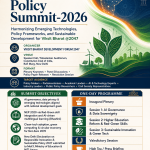



Vision Bharat Health 2050: A Report on Transformation and Future Healthcare
Prof. Ripu Ranjan Sinha
India’s healthcare sector is poised for a significant transformation driven by a changing demographic and epidemiological landscape, technological innovation, and a shift in care models. By 2050, India will be the world’s most populous nation with an average life expectancy exceeding 80 years. This demographic shift, with a large working-age population and a growing elderly population (projected to reach 14%), will place new demands on the healthcare system. The future of healthcare in India will be defined by a transition from a reactive, curative model to one that is proactive, preventive, and personalized.
Changing Demographic and Epidemiological Profile
The shift in India’s population dynamics will be a primary driver of healthcare evolution. The growing geriatric population will increase the demand for specialized services such as geriatric care, home care, and treatment for age-related conditions like dementia. Concurrently, increased urbanization (with over 50% of the population living in cities) and lifestyle changes will lead to a higher burden of non-communicable diseases (NCDs) like diabetes, cancer, and cardiovascular diseases. This dual burden of diseases—addressing both infectious diseases and NCDs—will necessitate a fundamental change in public health strategies.
The Role of Technology and Digital Infrastructure
Technology will be the linchpin of India’s healthcare transformation. The vision for 2050 is a healthcare system powered by a robust digital infrastructure.
- Digital Health Ecosystem: The establishment of a strong digital infrastructure, with IoT integration across personal devices, hospitals, and public health databases, will create a “Human Operating System” (Human OS). This platform will enable the collection and analysis of big data from various sources, facilitating predictive analysis for disease surveillance, clinical diagnosis, and population health management.
- Telemedicine and Remote Care: The explosive growth of mobile devices and internet penetration will drive the widespread adoption of telemedicine, reducing the burden on physical healthcare facilities. Patients will be able to consult with doctors remotely, and wearable devices will continuously monitor vital signs, allowing for early detection and intervention.
- AI and Analytics: Artificial Intelligence and Big Data analytics will play a crucial role in improving health outcomes. Predictive analytics will help identify at-risk individuals, allowing for proactive preventive measures. AI-driven clinical diagnosis and decision support systems will reduce human error and improve the quality of care.
Transformation of Care Delivery and Medical Advancements
The core of Vision Bharat Health 2050 is a shift in the care delivery model.
- Preventive and Predictive Healthcare: The focus will move from treating illnesses to preventing them. Widespread use of connected devices and personalized health data will allow for continuous monitoring and early intervention, making chronic diseases “things of the past” and minimizing patient dependency on public healthcare systems.
- Personalized and Regenerative Medicine: Advancements in genomics will lead to personalized drugs and pre-prescription genotyping, tailoring treatments to an individual’s genetic makeup. Breakthroughs in regenerative medicine, such as 3D printing of organs and the use of nanobots for internal repairs, will revolutionize treatments for life-threatening diseases and organ failure.
- Frugal Innovation: India is poised to become a global hub for frugal innovation, developing affordable medical solutions and products. Low-cost bio-electronic devices implanted inside the body will wirelessly deliver drugs for chronic ailments. This approach will ensure that advanced medical technologies are accessible to people across all income levels.
Key Pillars for Achieving the Vision
To realize this ambitious vision, significant investment and policy reforms are required.
- Research and Development: Both the government and the private sector need to invest heavily in R&D to propel innovation in drugs and medical devices. This will foster an ecosystem for indigenous development of advanced healthcare technologies.
- Public Healthcare System Transformation: The public healthcare system must undergo a major overhaul, moving beyond its current reactive model to a technology-integrated, patient-centric system. Digitization of public health databases and standardization of patient data are crucial for this transformation.
- Equitable Access: The vision aims to create a more equitable healthcare system where services are faster, cheaper, and better for everyone. By leveraging technology and focusing on point-of-service care within home premises, particularly in rural areas, primary and secondary healthcare services can be made universally accessible.