



By Prof. Ripu Ranjan Sinha In the global knowledge economy, the wealth of a nation is no longer measured solely by its natural resources or industrial output, but by its Intellectual Property (IP). As we transition from a service-centric model to a sovereignty-driven state, the management of knowledge becomes the ultimate strategic frontier. To facilitate […]
By Prof. Ripu Ranjan Sinha
In the global knowledge economy, the wealth of a nation is no longer measured solely by its natural resources or industrial output, but by its Intellectual Property (IP). As we transition from a service-centric model to a sovereignty-driven state, the management of knowledge becomes the ultimate strategic frontier. To facilitate this shift, I have introduced the “Sinha Seal of Approval”—a rigorous benchmark for Knowledge Management (KM) designed to transform raw ideas into protected, high-value assets.
The Paradigm Shift: From Service to Sovereignty
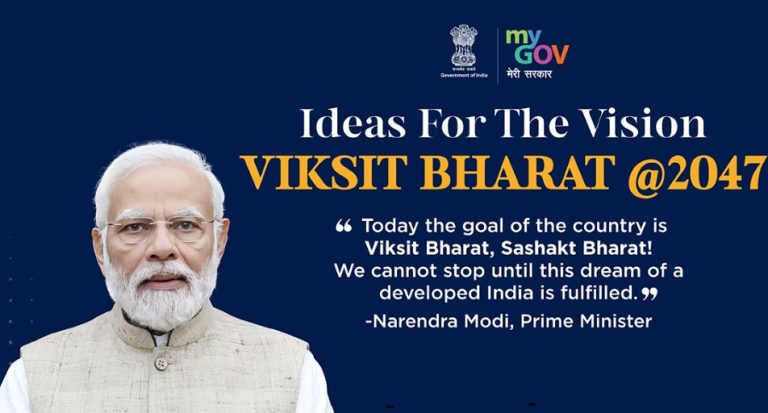
For decades, the global south has functioned as a talent reservoir for external IP creation. To achieve the goals of Viksit Bharat 2047, we must invert this pyramid. Strategic IP management is the bridge that allows us to own the “brain” of innovation rather than just the “hands” of execution.
Knowledge Management is not merely about storing information; it is about the strategic extraction of value. It requires a PhD-level understanding of how tacit knowledge (experience and intuition) can be codified into explicit knowledge (patents, copyrights, and trade secrets).
The “Sinha Seal of Approval”: A Framework for KM Excellence
The Sinha Seal of Approval is not just a mark of quality; it is a validation of an institution’s or individual’s commitment to the highest standards of intellectual rigor and IP integrity. It rests on four critical pillars:
1. Intellectual Audit & Discovery
Before IP can be protected, it must be identified. Many organizations sit on “hidden goldmines” of innovation.
- The Process: We conduct deep-dive audits to identify unique methodologies and research breakthroughs.
- The Goal: To ensure no intellectual asset remains under-leveraged or unprotected.
2. Rigorous Standardization
Knowledge is only valuable if it is scalable and reproducible.
- The Process: Applying global quality assurance standards to academic and corporate research.
- The Goal: To move beyond “ad-hoc” innovation toward a structured, peer-reviewed ecosystem.
3. Protection & Monetization
The “Sinha Seal” signifies that a piece of knowledge has been vetted for its commercial and strategic viability.
- The Process: Navigating the complex landscape of international patent laws and digital sovereignty protocols.
- The Goal: To ensure that Indian innovations are shielded from infringement while maximizing their global licensing potential.
4. Ethical Knowledge Transfer
KM must serve a higher purpose. The seal ensures that the “Red Green” philosophy is embedded—that technology (Red) is used to foster social peace and sustainability (Green).
Impact on the Knowledge Economy
By adopting a standardized approach to IP and Knowledge Management, we unlock several strategic advantages for India:
| Strategic Objective | The Role of the “Sinha Seal” |
| Global Credibility | Providing a trusted certification that signals Indian research is world-class and investor-ready. |
| IP-Led Growth | Shifting the economic engine from low-margin services to high-margin intellectual royalties. |
| Institutional Excellence | Helping universities and research bodies build robust IP cells that can compete on the global stage. |
| Sovereign Tech | Ensuring that critical technologies—AI, Blockchain, and ICT—are owned and governed indigenously. |
Securing the Intellectual Future
The future belongs to those who own the blueprints. As an academician and strategist, my mission is to ensure that India’s brightest minds are not just participants in the global tech race, but the ones defining the rules.
The Sinha Seal of Approval is my commitment to this mission. It is a call to scholars, entrepreneurs, and policymakers to stop treating knowledge as a byproduct and start treating it as our most valuable currency. When we master Knowledge Management, we don’t just participate in the future—we own it.
“Innovation is a gift of the mind; Intellectual Property is the fortress that protects it. Let us build a nation where every idea is a brick in the wall of our sovereignty.”